Training
CFSG Module C: Simulation of Continuous and Categorical Variables for Uncertainty Analysis and Domain Modeling
"I’ve always wanted to join the CFSG training because it’s known as one of the best geostatistics centers in the world, and the online program was just as great as I expected! All the professors and tutors from CFSG truly exceeded my expectations. The theory course gave me a solid grasp of the fundamentals, and the practical sessions walked us through the full workflow from basic to advanced methods. It really deepened my understanding of how things work, when and why to use certain techniques, and helped me apply advanced methods like non-linear estimation and simulation in my work. They made complex concepts feel practical, such a valuable experience that I honestly wish it could’ve lasted longer!"
"The CFSG course through A, B, C, D, etc. modules is a complete practical geostatistical training programme. For beginners and advanced mineral-estimation geologists, I highly recommend this programme with Isatis.neo Mining as application software. The Isatis.neo Mining software has revolutionized the mineral estimation workflow, making it easy with a report generated as you progress. The mineral resource estimation in the past was hindrances swapping between software; it is now easy and all in one package, from data validation to resource tabulation."
"As an exploration/resource development geologist, the CFSG training program has not only allowed me to understand better geostatistics and resource estimation concepts (EDA, IDW, OK, MIK…), but it has also bridged my career path from a resource development geologist to a resource estimation geologist. Thanks to the Center of Geostatistics of Mines Paris and Geovariances and their very comprehensive CFSG program, I was able to learn and reach my career goal without leaving my job."
Objectives
The CFSG – Specialized Training Cycle in Geostatistics – is a high-level training program in mining geostatistics delivered by the Geostatistics Team from Mines Paris and Geovariances, and offered in 3 independent modules.
This program provides an in-depth understanding of geostatistics for mineral resource estimation, enabling you to build the reliable block models your company needs for confident resource evaluation and mine planning.
Throughout the training, you will study the theoretical foundations of the methods presented and apply them through practical exercises and a real-world mineral resource estimation project.
The CFSG is intended for participants whose time zone is compatible with France and Central European Time. The online program is delivered in four modules over seven weeks during the first semester of 2027, starting in March.
Target audience
The CFSG training program is designed for mining geologists, resource geologists, mining engineers, resource modelers, and other technical professionals seeking to achieve a high level of proficiency in mining geostatistics.
Module A, on linear geostatistics, is particularly suitable for professionals who are new to mining geostatistics or who want to establish a structured theoretical and practical foundation in mineral resource estimation.
Module C is particularly suitable for professionals who already understand linear geostatistics and want to progress into conditional simulations for uncertainty analysis and geological domain simulation. It is especially relevant to professionals responsible ….
Content
This module is the third and last one of the CFSG series. At the end, you will be able to generate simulation realizations for quantified uncertainty analysis and geological modeling.
Simulations for continuous variables
Introduction
– Why resort to the Gaussian Model?
– Transform from Raw to Gaussian quantities: Normal score and Anamorphosis.
– Gibbs Sampler and Zero-Effect management.
Simulation algorithms
– Sequential Gaussian Simulations (SIS).
– Turning Bands Simulations (TBS).
– Direct Block Simulations for integrated support change.
– Stochastic Partial Differential Equations (SPDE) for handling local anisotropies.
Multivariate methods
– Gaussian Mixture Model (GMM) for completing missing data while preserving statistical relationships
– Projection Pursuit Multivariate Transform (PPMT) for decorrelating data with complex correlations to generate a coherent block model (correlations, ratios, chemical balance)
Simulations for categorical variables
Boundary analysis
– Comparison between soft and hard boundaries.
Theory of Indicators
– From geology to indicators.
– Indicator statistical properties.
– Indicator variogram (modeling).
Indicator Kriging
Sequential Indicator Simulations (SIS)
Truncated and Plurigaussian Simulations (TGS – PGS)
– Reminders: the Gaussian Simulation approach for continuous variables (e.g. Turning Bands)
– Ingredients: Indicators, dimension of the latent Gaussian field (mono-gaussian or pluri-gaussian), truncation rules
– Modeling: Facies proportions and variograms of the underlying Gaussian Random Function
– Non-conditional simulations
– Conditional simulations:
. Gibbs sampler for translating categorical constraints into Gaussian values
. Conditional Gaussian simulations
Introduction to other methods for modeling categorical variables
– Bi-PGS
– Multiple-point Statistics (MPS)
– Potential methods for implicit modeling
– Generative models
Practice
Several exercises to learn how to run simulation variants and post-processing (probabilistic resource estimation and facies modeling, statistics, simulation reduction, grade-tonnage curves, facies proportions modeling) using Isatis.neo.
Additional modules
Each CFSG module can be attended independently. However, completion of Module A, or equivalent experience in geostatistics and Isatis.neo, is required before participating in Modules B or C.
Module A: Linear Geostatistics for Local Resource Estimation
Spatial analysis, variography and kriging, the foundations of a block model you can defend. March 15-26 & April 5-16
Explore CFSG module A arrow_forwardModule B: Nonlinear Geostatistics for Recoverable Resource Estimation
MIK and Uniform Conditioning for grade-tonnage curves and the tonnes you can actually mine. May 24-28, 2027
Explore CFSG module B arrow_forwardModule C: Simulation of Continuous and Categorical Variables for Uncertainty Analysis and Domain Modeling
Conditional simulation for probabilistic grade and facies models, with risk quantified. June 7-11, 2027
Explore CFSG module C arrow_forwardOutlines
- Balanced learning approach: Half of the program is devoted to methodological presentations, while the other half focuses on practical exercises that reinforce understanding and application.
– Expert-led theoretical sessions: The methodological courses are delivered by professors from Mines Paris – PSL.
– Hands-on software training: Practical sessions are led by Geovariances consultants from the French office using Isatis.neo Mining Edition.
– Session recordings: Courses are recorded and made available to participants throughout the module and for one month following its completion. - Structured weekly schedule:
– Monday to Thursday: a half-day theoretical session followed by a half-day of hands-on practice.
– Friday: practical homework using Isatis.neo Mining Edition, compulsory submission, live corrections, feedback from the teaching team, and validation of acquired knowledge. - Full-time participation: CFSG is an intensive, full-time training program. Participants must remain present and connected throughout the scheduled sessions.
- Certification: Knowledge acquired in each module is evaluated through an examination. Participants receive an official training certificate upon successful completion of each module.
- Included learning resources: Course materials and a temporary Isatis.neo software license.
- Minimum attendance requirement: At least eight participants are required for a module to proceed.
Prerequisites
- Completion of CFSG Module A, or equivalent practical experience in geostatistics and Isatis.neo, is required.
- The training is delivered in English, and participants must have a good working command of the language.
- A sound understanding of mathematics is recommended.
- As the training is delivered online, participants need a reliable, high-quality internet connection.
- Participants are encouraged to keep their cameras switched on during live sessions to support interaction with the trainers and other participants.
Benefit from the trainers’ high expertise in geostatistics

Didier Renard, PhD
Teacher-researcher in geostatistics · Mines Paris - PSL
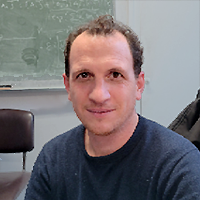
Nicolas Desassis, PhD
Data-sciences researcher · Mines Paris - PSL

Pedram Masoudi, PhD
Geostatistician, Geophysicist · Geovariances
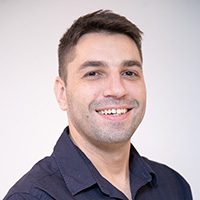
Roberto Rolo, PhD
Mineral Resource Consultant & Data Scientist · Geovariances
For any registration requests, quotes, or inquiries,
Please fill out the form
Address
44 Avenue de Valvins, 77210 Avon, France