More Control · Clearer Reviews · Easier Reporting
What's new in Isatis.neo 2026.1?
Isatis.neo 2026.1 introduces practical updates across data exchange, data preparation, statistical analysis, interpolation, simulation review and reporting. This version helps teams work from cleaner inputs, run clearer checks and produce results that are easier to review and share.
Start cleaner, move faster
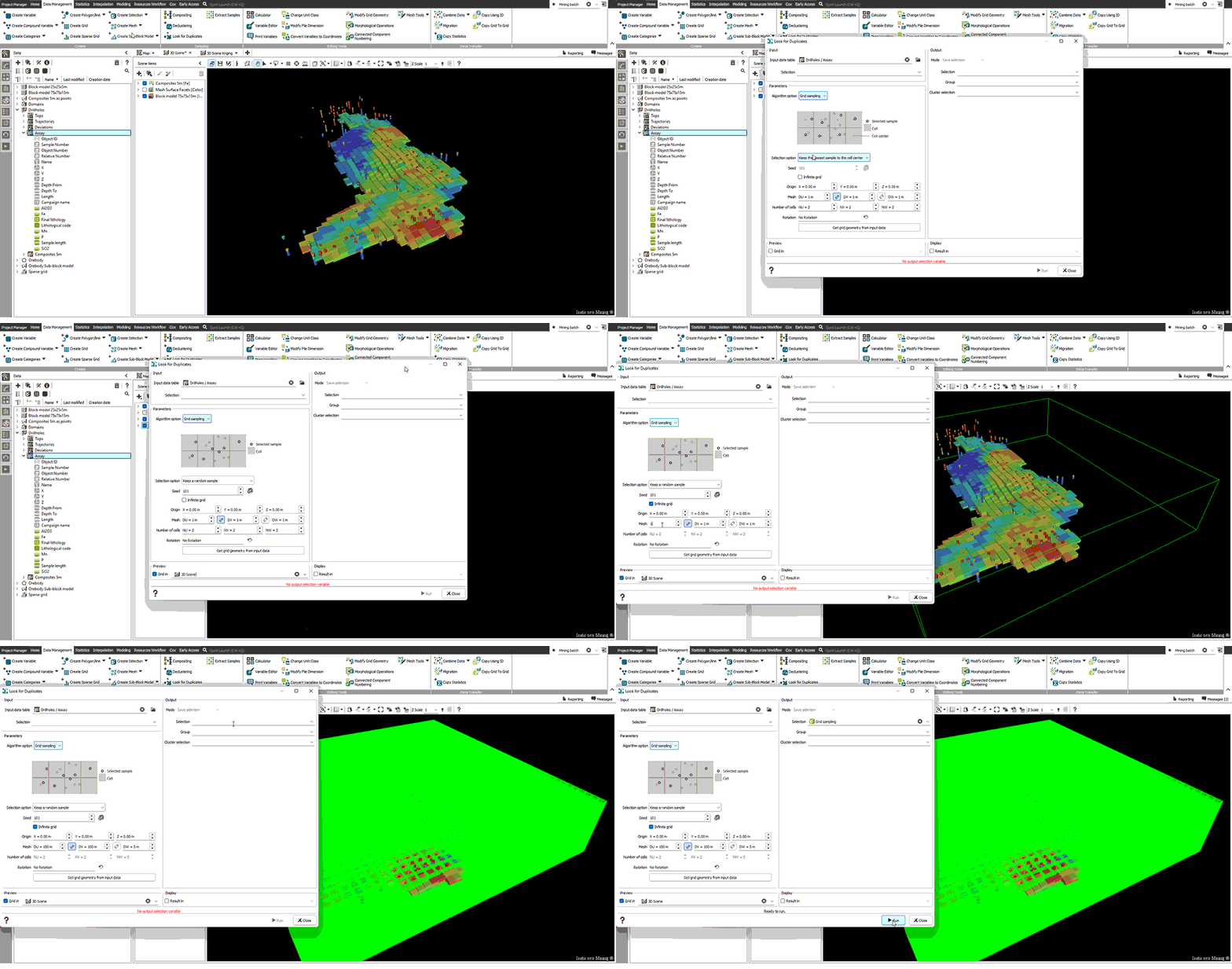
Isatis.neo 2026.1 makes data handling more reliable. Polygon exports to OGR formats now include associated variables, and GeoJSON support makes exchanges with GIS tools more straightforward. Vulcan import and export have also been strengthened with a coordinate unit selector. Isatis.neo can now apply the right coordinate and block-size conversions automatically, reducing the risk of unit-related errors. For dense datasets, the new Grid sampling option keeps one representative sample per virtual grid cell. This makes data preparation lighter, easier to control and simpler to validate before moving on to analysis.
More consistent samples, clearer insights
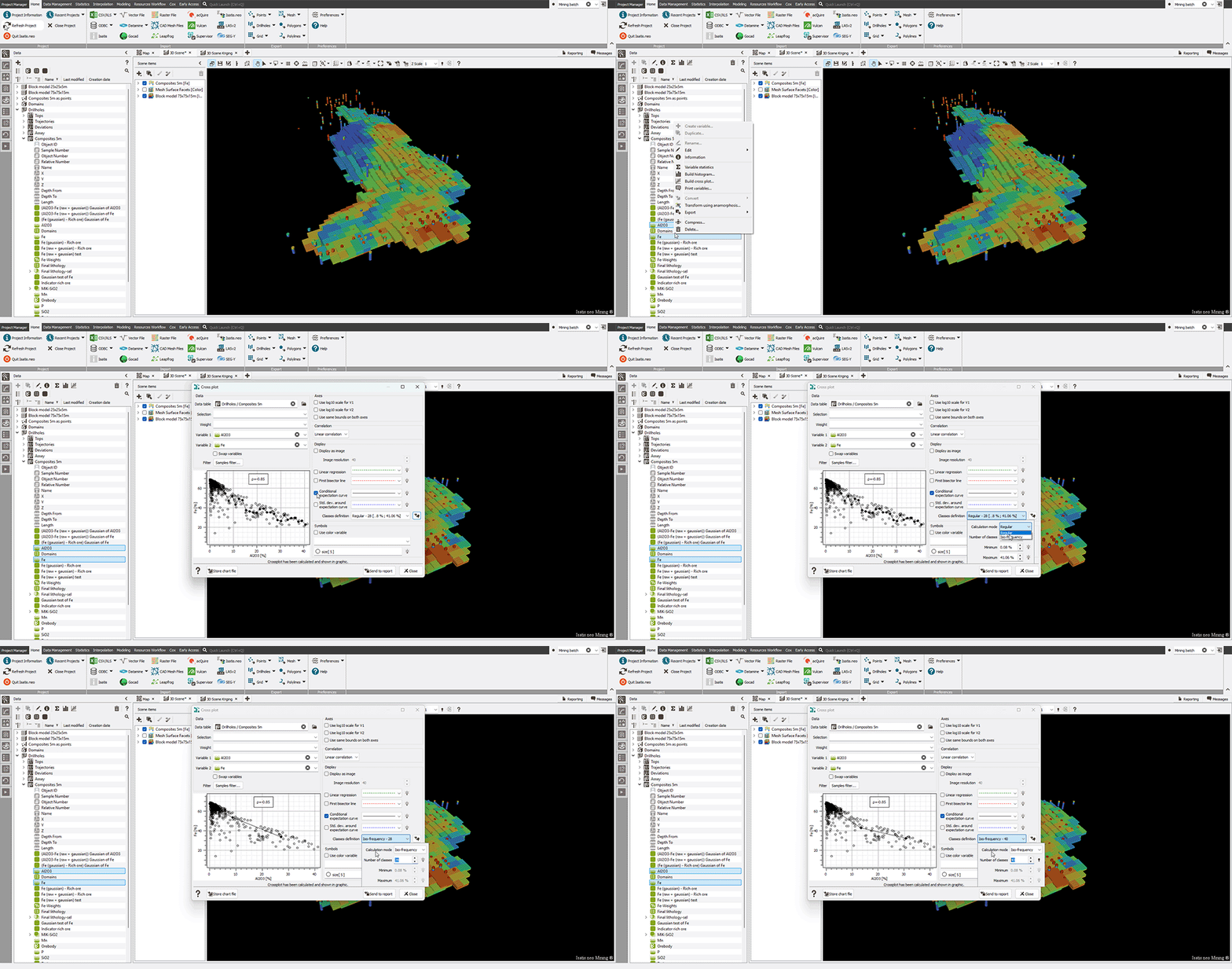
The new "Uniform composite residual spreading" mode helps create composites with strictly uniform lengths. It avoids overly long intervals and keeps the support closer to the target composite length. In "Cross plot", the Conditional expectation curve now supports iso-frequency classes. Each class contains the same number of data points, which gives a more balanced view of the relationship between variables. This is especially useful when the dataset is unevenly distributed. Trends are easier to read, and the interpretation is less influenced by the structure of the data.
Estimate with more confidence
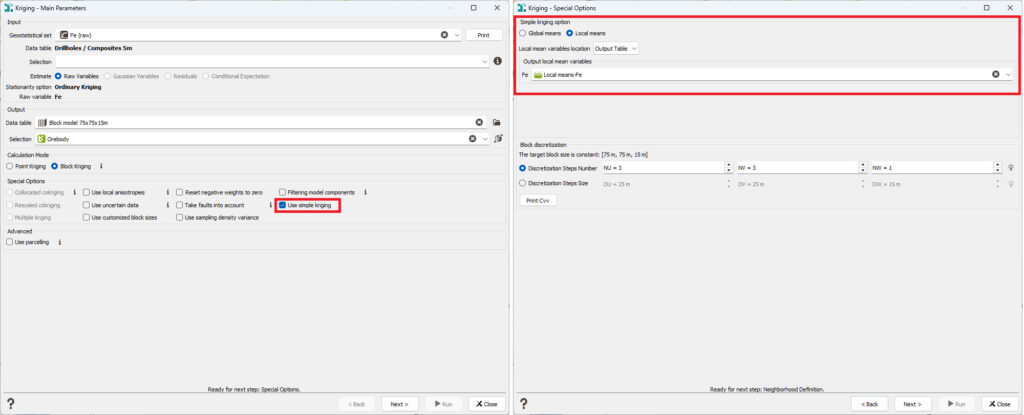
"Quick Interpolation" can now save the sum of interpolation weights for each target point. This gives users a direct way to check how each estimate is supported and makes results easier to review, validate, and document. Kriging and simulation workflows also include a new "Use simple kriging" option. Simple Kriging can now be used from an Ordinary Kriging geostatistical set when the model is strictly stationary, and the mean is known. This gives advanced users greater flexibility in setting up estimation and simulation workflows while keeping the process transparent.
Get more value from every simulation
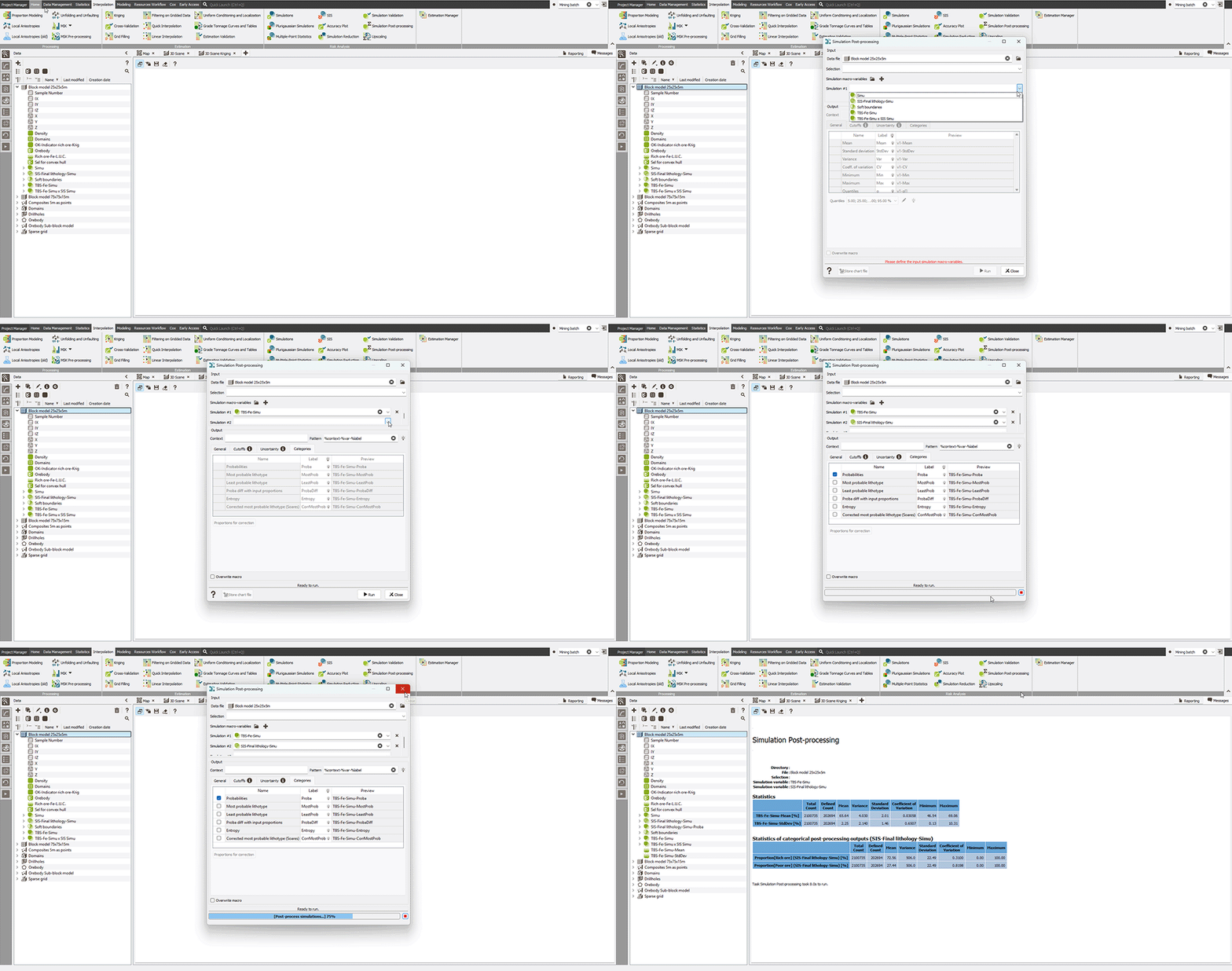
"Simulation Post-processing" now supports categorical simulations. Users can calculate category probabilities, identify the most and least probable categories, measure probability differences, compute entropy and use the Soares uncertainty criterion without rerunning simulations. "Simulation Validation" has also been improved. Directional variogram calculations for points and sub-blocks now take slicing radius or width into account. These additions make simulation review more efficient and give teams stronger tools to compare scenarios and assess uncertainty.
Present results your way
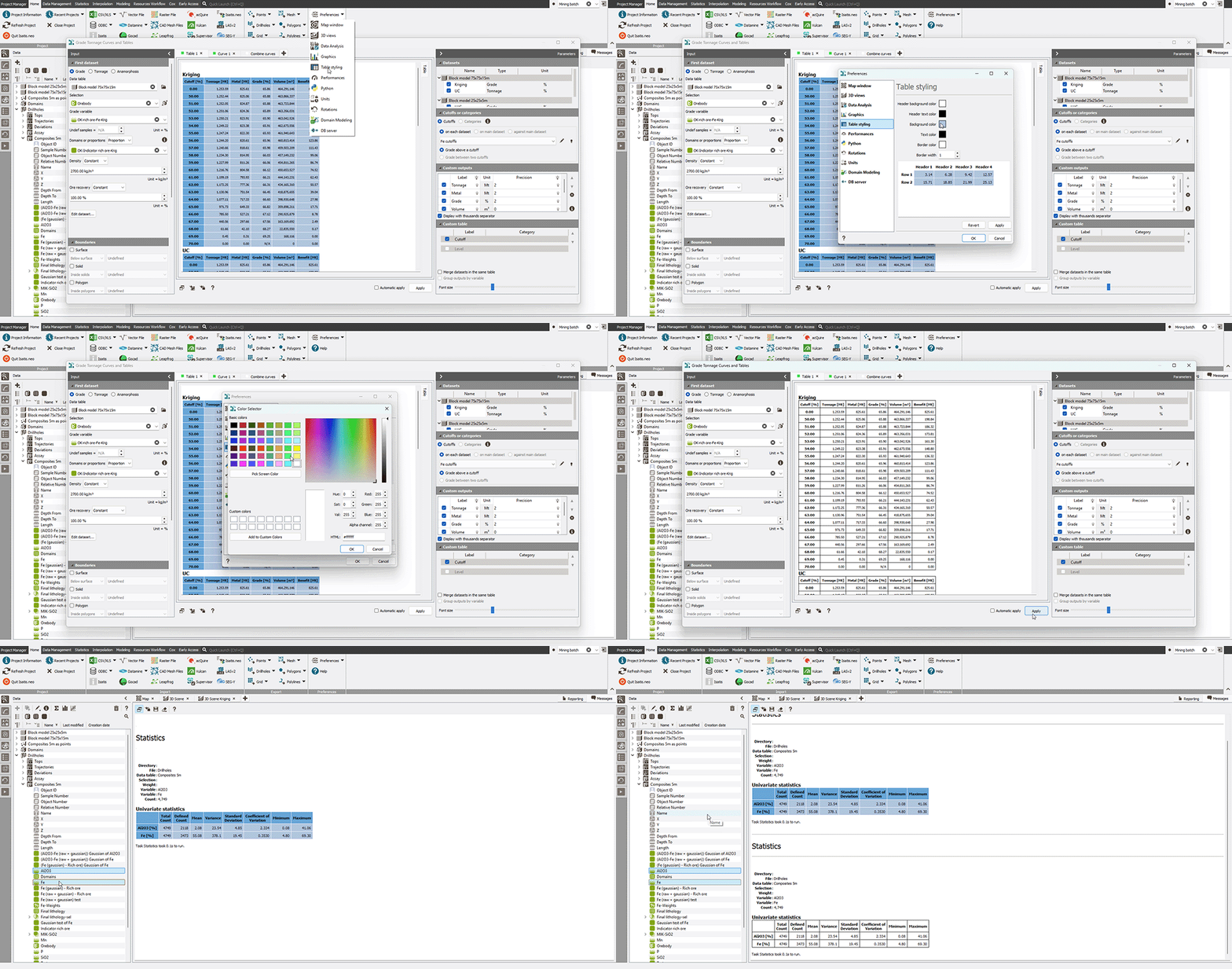
"Categorical upscaling" now lets users organize statistics tables by variable or by category, depending on the reporting objective. The result is easier to read and better adapted to different review contexts. New “Table styling preferences” also give more control over how results appear across Isatis.neo. Users can customize header colors, text colors, cell backgrounds, borders, and border widths. A live preview helps fine-tune the table before applying the settings, so results are clearer, more consistent and ready to include in your reports.
Ready to upgrade?
Download Isatis.neo v2026.1 to explore the latest features, updates, and improvements. See the release notes for a complete list of what's new.
ABOUT ISATIS.NEO
Isatis.neo provides a flexible, advanced geostatistics platform for teams working with spatialized data. It supports precise estimation, simulation and risk analysis, with automatic settings to streamline routine workflows and expert controls for more demanding studies. Optimized and parallelized algorithms keep calculations fast. Python integration and reproducible batch processing make Isatis.neo adaptable to many sectors, project types, and working methods. More details →
Want to learn more or have a demo?
Please complete the form.
Address
44 Avenue de Valvins, 77210 Avon, France